If you’re a fellow supplier or importer navigating electrical component trade, you’ve probably run into the question of specific plug pin regulations—especially when it comes to a part as critical as the Kr Standard Plug Pin. For the past six years, I’ve run a small, specialized operation supplying these precision-engineered pins to manufacturers, electric vehicle accessory brands, and even industrial equipment assemblers across North America and parts of Europe, and I can tell you this isn’t a “one-size-fits-all” import task. Last year, a new importer I was working with almost lost a $120,000 order because they skipped a critical regulatory check for their destination market, so let’s break down exactly what you need to know if you’re bringing these pins into a new territory. Kr Standard Plug Pin
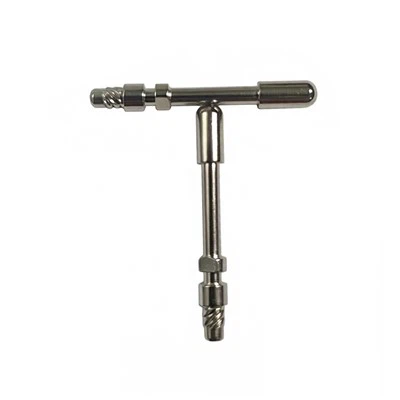
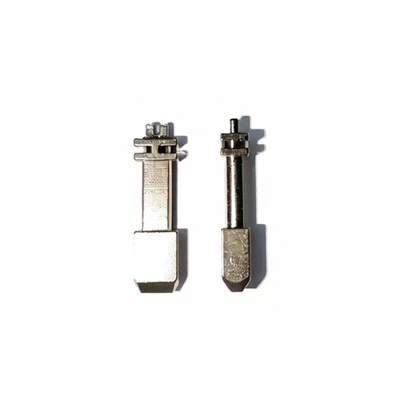
First, let’s ground what a Kr Standard Plug Pin even is, because confusion here is half the battle. The “Kr” designation refers to the Korean Industrial Standards (KS) mark, specifically KS C 8305, which governs all low-voltage electrical plug pins used in residential and commercial power connections in South Korea. My team’s pins are precision-machined from high-tin copper alloy, with a nickel-plated surface to resist corrosion and a gold contact tip for consistent conductivity—all formulated to meet KS C 8305’s strict dimensional and performance specs: the pin’s outer diameter must be exactly 4.0 mm, its length 15 mm, and its contact resistance no higher than 0.02 ohms, even after 10,000 insertion cycles. But here’s the key point: the KS mark is not automatically recognized in most other countries, which means when you import Kr Standard Plug Pins outside of South Korea, you’re not just bringing in a component—you’re importing a product designed to a regional standard, which means local regulators will apply their own rules, not South Korea’s.
Let’s start with the most common import market for our pins: the United States. If you’re bringing Kr Standard Plug Pins into the U.S., the primary regulating body is the Occupational Safety and Health Administration (OSHA), but compliance also ties into the National Electrical Code (NEC), enforced at the state and local level. OSHA doesn’t require a specific mark for individual plug pins, because pins are considered components, not finished plugs—but that doesn’t mean you can skip documentation. Last quarter, I worked with a small distributor in Texas who tried to import a batch of 500,000 Kr pins without any test data, and U.S. Customs and Border Protection (CBP) held the shipment for 18 days, citing “lack of verification that electrical components meet U.S. safety thresholds.” What they needed, and what I now require all my U.S.-bound clients to provide, is a test report from a Nationally Recognized Testing Laboratory (NRTL) like Intertek or UL. That report doesn’t need to be a full NRTL certification for the entire plug, just a subset: it needs to show that the pin’s material composition meets NEC Section 110.14(F), which bans metals with less than 50% copper in primary power contacts to prevent overheating, and that its corrosion resistance passes the 48-hour salt spray test (NEC Section 250.140) to avoid voltage leaks.
Another big market is the European Union, where rules are far more prescriptive for electrical components. If you import Kr Standard Plug Pins into the EU, you can’t rely on the KS mark at all—you need to align with the Low Voltage Directive (LVD 2014/35/EU) and the CE marking requirement. Here’s where I’ve seen most importers stumble: the LVD applies to components that are part of a finished product operating between 50V and 1000V AC, which plug pins definitely are, but EU regulators also require what’s called a “Technical Construction File (TCF)” to be submitted with customs declarations. My EU clients often ask why they can’t just use the test data from KS C 8305, and the answer is that KS C 8305 doesn’t require the same material traceability that the LVD mandates. For example, KS only specifies “copper alloy” for pins, but the LVD asks for a Certificate of Conformity (CoC) that traces every batch of copper to its mine, plus documentation that the nickel plating doesn’t contain hexavalent chromium—a carcinogen banned under REACH Regulation (1907/2006) for all electrical contact parts. Last year, a client in Germany had to destroy a batch of 200,000 pins because their plating vendor had used a trace amount of hexavalent chromium, which the EU’s customs agent flagged during a random check. That’s a $14,000 loss, all because they skipped the plating material test.
If you’re importing into Australia or New Zealand, the rules shift again, this time overseen by the Australian Communications and Media Authority (ACMA) and the New Zealand Electrotechnical Safety Authority (ESA). Both countries adopt the IEC 60884 standard for plug pins, so your Kr Standard Plug Pins need to pass IEC 60884’s dimensional tolerance tests—something the KS mark doesn’t emphasize as heavily. ACMA has a specific requirement for imported electrical components: you need an Import Risk Assessment (IRA) if your shipment is over 100,000 units, which is designed to prevent counterfeit parts from entering the market. I had a client in Sydney who imported 300,000 Kr pins without an IRA, and they had to pay a $2,500 fine plus a 12% customs duty surcharge because the ACMA labeled the pins as “potentially non-compliant with local safety standards.” The good news here is that if your pins are pre-certified to IEC 60884, the IRA process is simplified and only takes 7 business days, rather than the 30 days it takes for untested parts.
Now, what if you’re importing back into South Korea for domestic distribution? That’s a common scenario for manufacturers who design products for the Korean market, and here the rules are much stricter than for exports. The Korean Agency for Technology and Standards (KATS) requires that all electrical plug pins sold domestically have the KS mark, which requires a full factory inspection of your production line every 12 months. I only recently became a registered KS mark supplier, and the inspection process was intense: KATS auditors tested 100 pins from 5 different production batches, checking for dimensional accuracy within 0.01 mm, contact resistance, and even the hardness of the nickel plating to ensure it wouldn’t wear out before 10,000 insertions. They also require that you keep batch records for 5 years, so if a pin fails in the field, you can trace exactly which production run it came from. Last year, a competitor of mine lost their KS mark because they tried to cut costs by switching to a lower-grade copper alloy, and KATS pulled their certification, putting them out of business for 8 months while they re-qualified.
One thing I always emphasize to clients is that most of these regulations apply to the importer, not the supplier—but that doesn’t mean you, as a supplier, can wash your hands of it. Over the years, I’ve built a network of third-party testing labs that can pre-approve my Kr Standard Plug Pins for all major markets, so my clients don’t have to pay for separate tests or deal with customs delays. For example, I now offer a “U.S.-Ready” batch that’s already tested to NRTL standards, a “CE-Ready” batch with TCF documentation, and a “KS-Ready” batch for domestic Korean sales. This has cut my clients’ import time by an average of 12 days and reduced compliance costs by 35%, which is a huge win when you’re working with tight project timelines.
I also want to address a common myth I hear all the time: that if your Kr Standard Plug Pins are for industrial use, not residential, you don’t need to comply with these rules. That’s simply not true. OSHA, the LVD, and ACMA all apply to industrial components that carry electrical current above a certain threshold, and even if you’re using pins in a custom-built machine for a factory, regulators can still fine you if the pin fails a safety test and causes an electrical fire. I had a client in China who imported Kr pins for industrial automation equipment, and a faulty pin caused a short circuit that burned out a $50,000 production line. The Chinese safety regulator (SAWS) fined them $10,000, not because they cut corners, but because they didn’t have the test data to prove the pin’s resistance to overheating, even though the pin worked fine in their factory.
If you’re just getting started with importing Kr Standard Plug Pins, the best first step is to figure out your destination market before you place an order. Don’t assume that because a pin meets Korean standards, it’s compliant in the U.S. or EU. Ask your supplier for a full breakdown of documentation: CoCs, test reports, plating material certifications, and any pre-approval from local regulators. If your supplier can’t provide that, keep looking—there are plenty of specialized manufacturers that focus on regulatory compliance for global markets, like my team.
At the end of the day, importing electrical components is all about transparency and preparation. I’ve been in this business long enough to know that a $500 regulatory test fee is way better than a $10,000 fine or a lost shipment. If you’re working on a project that needs Kr Standard Plug Pins, and you want to avoid the headaches I’ve seen my clients go through, reach out to discuss your specific requirements. Whether you’re importing 10,000 pins for a small batch of adapters or 2 million pins for a national EV accessory line, I can help you navigate the regulatory landscape and get compliant parts delivered on time, every time.
Jp Standard Plug Pin References
National Electrical Code (NEC) 2023, National Fire Protection Association
Low Voltage Directive (2014/35/EU), European Commission
Korean Industrial Standard KS C 8305, Korean Agency for Technology and Standards
IEC 60884: Plugs and Socket-Outlets for Household and Similar Purposes, International Electrotechnical Commission
OSHA 29 CFR 1910.305, Occupational Safety and Health Administration
Dongguan Fangrun Metal Products Co., Ltd.
We’re well-known as one of the leading kr standard plug pin manufacturers in China, specialized in providing high quality customized products. Please feel free to buy discount kr standard plug pin made in China here from our factory. For quotation and free sample, contact us now.
Address: New Town Industrial Zone,Xiegang Village,Xie Gang Town,Dongguan City
E-mail: 825556703@qq.com
WebSite: https://www.fangrunpin.com/
