Hey everyone, if you’re here, you’re probably in the market for a wood plastic composite (WPC) machine, or maybe you just want to know why some WPC lines run like a dream and others turn out wonky, waste tons of material, and break down every other week. I’ve been selling WPC extrusion machines for 12 years now, so I’ve seen the good, the bad, and the straight-up garbage that makes small business owners want to pull their hair out. Today, I’m breaking down the real quality standards you actually need to care about—no fancy jargon, no sales fluff, just what will save you time, money, and headaches long-term. Wood Plastic Composite Machine

First, let’s get one thing straight: WPC machines aren’t one-size-fits-all. A lot of cheap suppliers will tell you their machine works for any blend, but trust me, if you’re mixing wood flour, plastic (HDPE, PP, PVC, whatever), maybe some coupling agent or colorant, you need a machine that can handle that specific recipe without messing up. The first big quality standard I always start with is the extruder’s design and barrel/screw quality. This is the heart of the whole operation, right? If your screw is cheap, or the barrel has weird machining, your material won’t mix properly. You’ll get streaky output, weak parts, and so much scrap you’ll be throwing half your raw material in the bin before you even start running full production.
Wait, what makes a good screw and barrel? Let’s keep it real. Most good suppliers (like my team and I) use bimetallic barrels, not just plain steel. Bimetallic means the inner lining is a hard, wear-resistant alloy—way better for when you’re pushing wood flour through, which is super abrasive. If you skimp here, the screw will wear down in 6 months instead of 5+ years, and you’ll have to replace a $2,000 screw every few months. The screw design matters too: not just any old screw that pushes plastic. It should be a WPC-specific screw, with mixing sections that actually shear the wood and plastic together evenly, but not so much that you burn the wood (burned wood turns your product dark, stinks, and is weak). We run our screws through nitriding too, which makes them even harder and more durable—small detail that makes a huge difference.
Next up: temperature control systems. This is another make-or-break thing I see new buyers sleep on. WPC is a weird blend—plastic melts at a certain temp, but wood starts to char if you get too hot, especially when there’s moisture in the wood flour. A bad temperature control system will have hot spots along the barrel and die, right? So one part of your extruder is too cold (plastic not melted, stuff clogs) and another is too hot (wood burns). No good. What should you look for? Individual temperature zones, not just a few big controllers, plus digital PID controllers. PID stands for proportional-integral-derivative, and it keeps the temp super consistent—within like 1 degree, not +/- 10 degrees like cheap analog controllers. We use Schneider PID controllers on all our machines, and I can’t tell you how many customers have told us that’s the first thing they noticed that set our machine apart from the cheaper ones they tried. Also, do they have a drying system for the wood component? Wood absorbs moisture, and that moisture turns to steam in the extruder, causing bubbles in your final product. So a good machine should have an integrated or compatible dehumidifying dryer for wood flour—again, saves you from scrap.
Then there’s the die and calibration table. The die is what shapes your WPC product—think decking boards, fence slats, trim, whatever. A cheap die will warp after a few runs, or have uneven holes/gaps that make your product come out wonky. You want a die made from solid steel (not cast aluminum, which bends) and machined with CNC to super tight tolerances—like within 0.02mm. Our dies are CNC-machined, and we test each one with water before it leaves the shop to make sure there are no leaks or uneven gaps. The calibration table is what cools and sizes the product after it leaves the die. If the calibration table is bad, your product will be bowed, twisted, or have inconsistent dimensions. Look for a vacuum calibration table (not just air cooling) because vacuum pulls the product tight against the calibration tool, so the dimensions stay spot on. Also, the cooling sections should be long enough—short cooling tables mean the product isn’t set enough when it hits the haul-off, so it gets distorted. We make our calibration tables 6+ meters for decking, depending on the profile, because we’ve tested over and over that shorter ones lead to way more off-spec parts.
Wait, let’s talk about the haul-off and cutting system too—those parts work right after the calibration table, and if they’re off, all that work before is wasted. The haul-off pulls the product at a consistent speed, right? If it’s too fast, you stretch the product and it gets thin. Too slow, and it piles up and breaks. A good haul-off has variable speed control that syncs with the extruder speed automatically, not something you have to adjust manually every 2 minutes. We use servo-driven haul-offs because they’re super precise, way better than the old hydraulic ones that jerk and cause speed fluctuations. Then the cutting system: you want a saw that cuts clean, not crushes the WPC. Crushed ends mean you have to trim a lot off, wasting material, and also the cut ends are weak. A diamond-tipped saw blade is non-negotiable here, and it should be adjustable to cut to exact lengths—no more measuring and cutting manually, which is slow and inaccurate.
Now, something a lot of suppliers don’t mention, but that’s a hidden quality standard: control system user-friendliness and reliability. I’ve had customers call me at 8 PM panicking because their cheap machine’s control screen froze, and they lost a whole batch. You don’t need a super complicated industrial system that needs a degree to operate. But you do need a reliable, easy-to-use touchscreen with clear parameters, and backups in case there’s a power blip. Our control system runs on a Siemens PLC, which is used in a ton of industrial equipment, so parts are easy to find if something goes wrong, and most maintenance guys know how to fix it. Also, look for safety features—emergency stops every 2 meters, guards on all moving parts, overheat protection. Safety isn’t just a box to check; it’s how you avoid accidents that shut down your production for days.
Wait, let’s get into material efficiency—that’s a big one that ties into quality standards too, because a machine that wastes material is basically a bad machine. A good WPC extruder will have low backflow, so all the material you put in gets pushed out the die, not leaking back into the hopper. Also, the blending unit (if you have a separate mixer for raw materials) should be efficient too—premature mixing that’s not even will lead to uneven product. We recommend our customers use a high-speed mixer that can get the blend to the right temp and consistency without burning anything, and our extruders work seamlessly with those mixers, so you don’t have to adjust settings to make them play nice. I’ve seen some cheap machines that work with no-name mixers, but they end up with 10-15% scrap because of bad blending, while our customers get like 2-3% scrap max. That adds up quick if you’re running thousands of tons a year.
Oh, and wear and tear on the whole line, not just the screw and barrel. The gearbox that drives the extruder—if that’s cheap, it’ll blow up in 1-2 years. We use heavy-duty gearboxes from reputable brands, not cheap Chinese knockoffs, because they’re built to handle the constant torque of pushing WPC (which is heavier than just plastic). The motor too—induction motors from companies like ABB or Siemens, not generic ones that overheat and burn out. If your gearbox or motor goes, you’re down for weeks waiting for parts, which kills your profit. That’s a standard most new buyers don’t think about until it’s too late.
Wait, should I mention testing? Yeah, because a good supplier will test the machine before it ships. We run every single WPC machine we build with customer-specific material blends for 2 hours straight before it leaves our shop. We check the output quality, dimensions, temp consistency, all that. If you’re dealing with a supplier that says “we don’t test them, that’s a waste of time,” run the other way. That’s not a quality standard, that’s them cutting corners.
Let me also touch on after-sales service, because that’s part of the machine’s long-term quality. A lot of people focus just on the upfront price, but if your machine breaks at 2 AM on a Sunday, can you get someone on the phone? Does the supplier have spare parts on hand? We keep a full stock of common parts in our warehouse, and our techs are on call 24/7 for customers—within 4 hours of the US, 24 for international, no exceptions. If your supplier won’t stand behind their machine, even if it’s cheap, it’s not a quality machine.
Wait, let’s make sure I didn’t miss anything. What about for different WPC products? Like, if you’re making thin trim vs thick decking, does the machine adjust? Our line has modular settings, so you can swap out dies and adjust calibration tables without rebuilding the whole machine, which is a big plus. A lot of cheap lines are fixed to one product, so if you want to expand, you have to buy a whole new machine. That’s a waste of money.
Let me wrap this up with a real example, something I saw last year. A small decking company in Texas came to us because they bought a $50k WPC machine from a supplier in Southeast Asia. They were running 500 tons a month, but having 15% scrap, broken screws every 6 months, and downtime that cost them $10k a week. They upgraded to our line, spent $80k, and within 3 months their scrap dropped to 2%, their screw lasted 18 months, and their downtime was almost zero. That’s the difference between following actual quality standards and cutting corners.
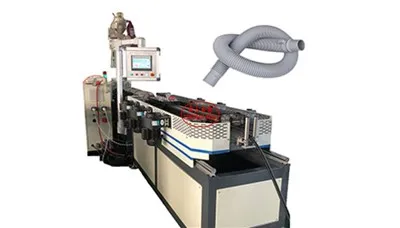
So to recap, the real quality standards for a WPC machine aren’t just the parts you can see. It’s the bimetallic nitrided screw and barrel, PID temp control, CNC-machined solid dies, vacuum calibration tables, servo-driven haul-offs, reliable brand control systems/gearboxes/motors, pre-shipment testing, and a supplier that actually supports you after the sale. Skip the cheap “bargain” machines, because you’ll end up paying way more in scrap, repairs, and lost production.
PP Hollow Sheet Extrusion Line If you’re ready to stop dealing with unreliable WPC equipment and get a machine that runs smooth, cuts down your waste, and grows with your business, hit us up. We can walk you through matching a machine to your exact product needs, send you test run videos, and answer any questions you have—no hard sell, just real talk.
References
- Wood Polymer Composites: Processing, Properties, and Applications, 2nd Edition, CRC Press
- Extrusion Technology Handbook, 3rd Edition, Industrial Press Inc.
- Guidelines for the Evaluation of WPC Extrusion Equipment, National Wood Flooring Association
Qingdao Tongsanhegu Plastic Machinery Manufacturing Co., Ltd.
With abundant experience, we are one of the most reliable wood plastic composite machine manufacturers and suppliers in China. We warmly welcome you to buy durable wood plastic composite machine for sale here from our factory. Quality products and reasonable price are available.
Address: West of Xixinzhi Village, Sanlihe District Jiaozhou, Qingdao City, Shandong Province, China
E-mail: info@tongsanhegu.com
WebSite: https://www.tongsanhegumachine.com/
