If you’ve ever stood in line at a public EV charger, phone dying in your hand while your car’s battery ticks down, you know the pain. Or maybe you’re a business owner planning to add chargers for your staff or customers, and you’re staring at utility bills that make you go “whoa, that can’t be right.” As a BESS supplier, I talk to people dealing with these exact headaches every single day—and most of them don’t realize a BESS isn’t just a big backup battery for blackouts. It’s the behind-the-scenes hero that makes reliable, affordable EV charging actually work. Let’s break this down like we’re chatting over coffee, no jargon promised. Battery Energy Storage System
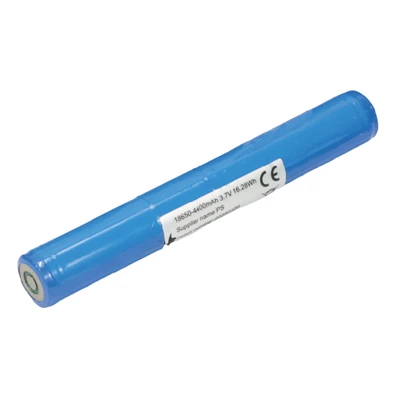
First, let’s get one thing straight: a BESS is basically a giant, rechargeable battery bank paired with smart software that controls exactly when it charges and discharges power. Think of it as a middleman between two super powerful players: the electric grid and all the EVs waiting to charge. Without this middleman, EV charging would be way more expensive, inconsistent, and hard to scale. Let’s start with the biggest pain point most EV chargers run into: grid demand charges. That’s the fee utilities hit commercial sites with when they use a ton of power at once. Say you’re a grocery store putting in 10 fast chargers for delivery vans and customer cars. Those fast chargers pull 150 kW each—so if all 10 fire up at the same time, that’s 1.5 MW of power. Your utility will slap you with a huge demand charge for that single peak hour, because they have to crank up extra power plants just to feed you.
That’s where BESS steps in. It charges up during off-peak times, like 2 a.m. when no one’s using power and electricity is cheap, then feeds that stored energy to your chargers during those peak high-demand hours. So instead of pulling 1.5 MW straight from the grid at 5 p.m. when everyone’s grabbing groceries, your chargers pull power from the BESS. You avoid the massive demand charge, and the whole system stays smooth. Last year, we set up a BESS for a small bus depot in Texas that saves them over $12,000 a month on electricity bills alone. Their demand charges dropped by 75%—they were shocked at first, too.
Next up, keeping charging reliable when the grid flips out. We’ve all heard about those summer heatwaves when the grid strains so bad, neighborhoods get blackouts. If you’re a apartment complex with 15 EV chargers, a blackout means your tenants can’t top up their cars. A BESS acts as backup power here—its smart software can tell when the grid goes down in milliseconds, and switch over to feeding the chargers and common areas in a heartbeat. We did a test run last summer for an apartment complex in Phoenix, right as a heatwave hit. The local grid went out for 4 hours, and all their EVs stayed charging the whole time. No complaints from tenants, no lost business for the complex. That’s the kind of peace of mind BESS brings that people don’t always think about until they need it.
Then there’s the whole renewables angle. More and more places are getting their power from wind and solar, which are great—but they’re intermittent. The wind doesn’t always blow, the sun doesn’t shine at night. So on a windy day, the grid might have way more power than it needs, and utilities pay people to take it off their hands (that’s called curtailment). A BESS can suck up that extra cheap renewable power when it’s available, store it, and use it when the wind dies down or the sun sets. So your EV charging is running on clean energy 24/7, not just when the power line says it is. We worked with a shopping mall in Oregon that switched their chargers to run on BESS-stored solar power. Now their customers can charge knowing they’re not adding extra fossil fuel emissions, and the mall’s marketing team loves that “100% solar-powered charging” line for their ads.
Wait, let’s talk about scaling without upgrading the grid. A lot of small businesses hesitate to add EV chargers because they think they need to rip up parking lots and run new, super thick power lines from the street—those upgrades can cost tens of thousands of dollars, and take months to complete. A BESS solves that problem. Instead of upgrading your entire grid connection, you add a BESS and a few chargers, and the BESS smooths out the power flow. We had a café in Seattle that wanted to add two fast chargers, but their old grid connection was only strong enough for one. Adding a BESS let them install both chargers without any grid upgrades at all. They saved over $20,000 on installation, and had the chargers up and running in 2 weeks instead of 3 months. That’s the kind of flexibility that makes BESS a game-changer for small businesses, not just big corporate sites.
But let’s not make it sound like BESS is a magic fix. It’s all about the smart software that runs it—hardware is just a battery, right? The software is what makes it work. It’s constantly monitoring the grid, electricity prices, weather forecasts, even how many EVs are using the chargers that day. If a big storm is coming, it will top up extra so it’s ready to keep charging if the grid strains. If a local event is bringing hundreds of people to a parking lot, it can adjust its discharge schedule to make sure no one waits around for a charger. We build our BESS software to be customizable, too—so if a client wants to prioritize charging for their delivery vans during the day, and personal cars at night, we set that up in a quick setup call, no complicated engineering work needed.
Another big one: peak shaving for residential complexes. If you live in an apartment, you know how finicky the parking lot chargers can be. Too many people charging at the same time, and some chargers slow down or turn off to avoid overloading. A BESS fixes that by managing the power flow to each charger. No more fighting for a slow charger at 7 a.m. when everyone’s rushing to work. We had a 50-unit apartment building in Atlanta that was getting 20 complaints a month about chargers being too slow after adding a BESS. Within a week, all chargers were at full speed when needed, and the building’s electric bill dropped by 20%.
Let’s be real, there are still myths out there about BESS. Some people think it’s too expensive, but when you do the math, it pays for itself in 3 to 5 years, depending on how often you use it. And as battery costs keep dropping (they’ve fallen 80% in the last 10 years, for those who don’t follow that industry), it’s only getting more affordable. Others worry about safety, but modern BESS has built-in fire suppression systems, thermal management, and constant monitoring—way safer than the old big lead-acid batteries you might remember.
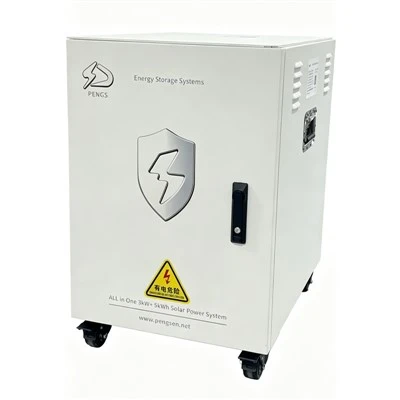
At the end of the day, when a client comes to me saying they want to add reliable, affordable EV charging, the first thing I ask is if they’ve thought about how a BESS fits in. Too many people jump straight to buying chargers, and run into problems with the grid, high bills, or inconsistent service. A BESS doesn’t just solve those problems—it lets you scale faster, save more money, and offer a better experience for anyone using your chargers.
Two Wheeler Battery If you’re a business owner, property manager, or municipality that’s tired of the headache of EV charging—whether it’s high bills, grid limits, or unreliable service—we can walk through exactly how a BESS would work for your specific space. No pushy sales pitch, no confusing jargon, just a straight chat about your needs and how we can help. Reach out to us to talk through your project, and we’ll put together a custom plan that fits your budget.
References
- U.S. Department of Energy. (2023). Battery Energy Storage Systems for Electric Vehicle Charging: Benefits and Considerations.
- International Energy Agency. (2024). The Role of Energy Storage in Scaling Electric Vehicle Charging Infrastructure.
- Edison Electric Institute. (2023). Demand Charge Management for Commercial EV Charging Sites.
- National Renewable Energy Laboratory. (2023). BESS Applications for Grid Integration and Peak Shaving.
- BloombergNEF. (2024). Lithium-Ion Battery Price Trend Report.
Zhuhai Greaton Electronic Technology Co., Ltd.
As one of the most professional battery energy storage system manufacturers and suppliers in China, we have world-leading production equipment and strong manufacturing capabilities. Please rest assured to wholesale advanced battery energy storage system in stock here from our factory. Customized orders are welcome.
Address: 2nd Floor, Building A3, No. 6, Liulu, Xinqing Science and Technology Industrial Park, Jing’an Town, Doumen District, Zhuhai City
E-mail: wangchen1@psbattery.cn
WebSite: https://www.cngreaton.com/
