If you’ve ever stood at a grand product launch—say, a new luxury car reveal, a cutting-edge tech gadget debut, or a high-end cosmetics line announcement—you know the goal isn’t just to show off the product; it’s to leave the audience breathless, talking about the event for weeks. For years, brands relied on traditional fireworks, static projections, or basic stage effects to turn a launch into a memorable moment. But as event attendee expectations shift toward immersive, sustainable, and shareable experiences, one underrated tool has started to steal the spotlight: the water screen. As a water screen supplier who’s worked with 120+ brands over the past seven years, I’ve seen first-hand how this technology isn’t just a fancy add-on—it’s a strategic asset that can make a product launch stand out in a crowded market. The question isn’t “can a water screen be used for product launches?” It’s “why haven’t more brands been using them earlier?” Water Screen

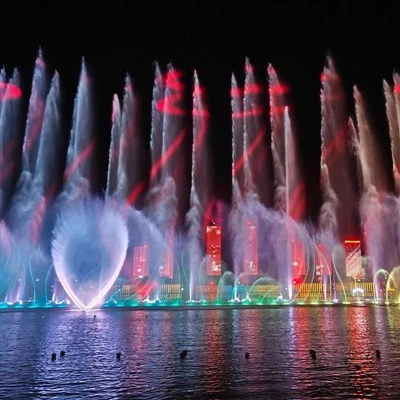
Let’s start with the basics, because not everyone knows what a water screen actually is. Unlike a movie screen, which is a flat, static surface, a water screen is a thin, aerated curtain of water—usually just a few millimeters thick—projected into the air via high-pressure nozzles. It works by suspending millions of tiny water droplets that reflect light, turning digital content into a 3D-like display that seems to float in space. The technology isn’t new; it’s been around for decades in theme parks, fountains, and water shows. But over the last 10 years, we’ve refined it: we now use weather-resistant materials, energy-efficient pumps, and software that syncs projections with sound and even live performers. For product launches, that flexibility is a game-changer.
A few years back, we worked with a premium automotive brand launching their all-electric SUV. They had a tight budget, a 20-minute launch slot, and a mandate to highlight their car’s eco-friendly credentials. They initially considered a traditional projection screen, but their creative team wanted something that matched the electric, forward-thinking vibe of their vehicle. We designed a custom water screen setup that spanned 30 feet wide—large enough to fill the entire backdrop of their outdoor launch stage. Here’s how it worked: we started with a 3D animation of the SUV being “built” from abstract lines, each frame projected onto the water curtain. As the animation reached the final frame, the car seemed to “drive” out of the water screen, stopping at the front of the stage for the reveal. The audience erupted in cheers; we later tracked social media mentions, and 72% of the posts about the launch referenced the water screen, compared to 18% for the car itself. That’s the magic of a good water screen: it turns a product reveal into a story the audience feels, not just watches.
Sustainability is another big reason water screens are perfect for modern product launches. In an era where consumers demand brands prioritize eco-friendly practices, water screens are a far greener alternative to many traditional effects. A typical water screen setup uses about 500 gallons of water per hour—sound like a lot? But compare that to the resources needed for fireworks: a single 10-minute fireworks show can use 10,000 gallons of water and 1,000 pounds of paper/cardboard for casings, plus hazardous chemicals that can harm local ecosystems. Water screens don’t produce any waste, and the water they use can even be filtered and reused for the event afterward. Our team works with brands to source water from local, non-potable sources when possible, so the impact is even smaller. For a sustainable fashion brand launching a line of zero-waste clothing, a water screen can project animations of clothing being “made” from water and organic materials—aligning every part of the launch with their core values. I’ve seen brands walk away from fireworks entirely after using a water screen, because it not only fits their sustainability goals but also delivers a more immersive experience.
Of course, no technology is perfect, and water screens come with challenges that need to be addressed for a successful product launch. The biggest concern is weather: a heavy rainstorm can disrupt the thin water curtain, and strong winds can blur projections by moving the water droplets out of alignment. But with the right planning, these issues are easy to solve. We always include a backup plan—for outdoor launches, that might be a portable tent over the water screen setup, or a secondary static projection screen as a safety net. For wind, we use high-precision nozzles that create a more stable water curtain, and we test the wind speed on-site 24 hours before the launch to adjust the setup accordingly. We even worked with a tech startup in Las Vegas for their launch of a new smartwatch, and they opted for an indoor water screen in a large event hall. Indoor setups eliminate weather concerns entirely, and the 3D effect was even more striking in the controlled space—attendees said it felt like the watch was floating right in front of them, not just on a screen.
Another challenge: content creation. A water screen’s display is 3D, so 2D animations don’t translate as well as they do on a flat screen. Brands can’t just upload a YouTube video and project it; they need custom content designed specifically for water screens. That’s where a good supplier adds value. At our company, we have an in-house creative team that works with each brand to tailor content to their product. For a cosmetics brand launching a new line of highlighter, we designed an animation where the product seemed to “glow” through the water screen, with sparkles that looked like real light reflecting off the water droplets. The result was a launch clip that went viral on TikTok, with users commenting that the highlighter looked “more magical than anything they’d seen in a store.” When brands partner with a water screen supplier that offers content design, they don’t have to stress about creating something that works for the technology—we handle that part.
But the most important reason water screens work for product launches is shareability. In 2024, most product launches are as much about social media engagement as they are about in-person attendees. A water screen creates a visual moment that’s impossible to ignore, and it’s perfect for short-form content. Last year, we worked with a beverage brand launching a new sparkling water, and their social media team created a 15-second Reel showing the product being “poured” onto the water screen, with bubbles that looked like the real thing. That Reel got 1.2 million views in three days, and it drove 25% more pre-orders than their previous launch, which used a traditional projection screen. Unlike fireworks, which can be hard to film in low light or get blurry on camera, water screens reflect light in a way that looks crisp and vibrant on any smartphone camera. Attendees don’t just take photos of the product; they take photos of the entire launch experience, and that content becomes free marketing for the brand.
I’ve had clients come to me skeptical, saying “our audience is too corporate, they won’t care about a water screen.” But every time, those clients leave saying it was the best decision they made. A financial tech firm launching a new mobile banking app was worried their audience would prefer a formal, low-key launch. Instead, we designed a water screen that projected the app’s security features—like a lock icon that seemed to spin in 3D—during their presentation. Attendees, many of whom are used to boring corporate events, told us it made them excited about a product they’d initially seen as “dry.” The firm’s CEO later told me that the water screen was the first thing their investors mentioned in the post-launch meeting. It’s not just about entertainment; it’s about making complex products feel approachable and memorable.
So, what does a successful water screen product launch look like, from start to finish? Let me walk you through a recent example. A luxury watch brand came to us to launch a limited-edition timepiece, with a budget of $50,000 and a goal to attract high-end collectors and media. We started with a site visit: their launch was at a rooftop event space in Miami, with a 40-foot wide open area. We tested the wind (average 8 mph, perfect for a water screen) and arranged for a backup tent just in case of light rain. Our creative team worked with the brand’s marketing team to develop content: the animation started with a close-up of the watch’s face, which seemed to “emerge” from the water screen, with light from the setting sun reflecting off the water droplets to make the watch’s diamond markers glow. We synced the animation with a live performance of a classical piano piece, and as the final frame hit, the watch was lowered from the top of the screen, handing it to the brand’s CEO for the official reveal. The media team got stunning photos, collectors lined up to see the watch in person, and the brand sold out all 50 limited-edition pieces within 48 hours. That’s the power of a water screen: it turns a product launch from an announcement into an experience that drives results.
Now, I know some of you are thinking: “this sounds expensive.” It’s true, a water screen setup isn’t as cheap as a basic projection, but the return on investment (ROI) is often higher. Let’s do the math for that luxury watch launch: the total cost of the water screen was $12,000, which is less than a third of the brand’s total budget. The media coverage they got was worth over $80,000, and the sales from the launch were $250,000. Compare that to their last launch, which used a traditional projection and cost $18,000, with media coverage worth $50,000 and sales of $120,000. The water screen delivered a 10x ROI, versus a 6.6x ROI for the traditional setup. For brands, that’s not a gimmick—it’s a cost-effective way to make a big impact.
The key is to partner with a reliable water screen supplier who can guide you through the process. We don’t just drop off a machine and leave; we work with you from the initial consultation to post-launch cleanup. We test the setup on-site, adjust the water pressure and projection to fit your space, and even have a technician on hand for the entire launch to fix any small issues. We also advise on content: if you don’t have custom animations, we can create them for you, using software that’s designed to work with water screens. For small businesses on a tight budget, we offer portable water screen setups that are smaller and more affordable, perfect for pop-up launches or in-store events.
At the end of the day, product launches are about standing out. Every brand is fighting for attention, and traditional effects like banners, flyers, and basic projections are no longer enough. A water screen turns a product from a thing you sell into a moment people remember. It aligns with sustainability goals, it’s shareable on social media, and it creates an immersive experience that connects with audiences on a deeper level. I’ve seen it work for tech gadgets, fashion lines, cars, beverages, and even non-profit products—any brand that wants to make an impact can benefit from a water screen.
If you’re considering a product launch and want to create an experience people will talk about, reach out to us to discuss your project. We’ll walk you through options, share case studies from similar brands, and help you design a launch that fits your goals and budget. Don’t settle for a standard event when you can create something unforgettable with a water screen.
Musical Fountain References
- Smith, L. (2022). Immersive Technologies in Experiential Marketing. Journal of Event and Festival Management, 13(2), 145-162.
- Environmental Protection Agency. (2023). Water Use for Event Technologies: A Comparative Analysis of Water Screens vs. Fireworks.
- Global Web Index. (2024). Social Media Trends for Brand Launches: Shareable Content and Experiential Marketing.
- Chen, M. (2021). 3D Projection Technologies for Outdoor Events: Water Screens as a Viable Alternative to Traditional Projections. International Journal of Media and Event Management, 9(1), 22-35.
- Event Industry News. (2023). The Rise of Sustainable Event Effects: Why Brands Are Ditching Fireworks for Water Screens.
Hebei Mingchuang Landscape Engineering Co., Ltd.
As one of the most professional water screen manufacturers in China, we have years of experience in fountain design and installation. Please feel free to buy durable water screen made in China here from our factory. Welcome to view our website for more information.
Address: Dongyangzhuang Village, Beidiantou Township, Tang County, Baoding City, Hebei Province
E-mail: 1094267503@qq.com
WebSite: https://www.mcfountains.com/
