If you walk into a factory at 3 a.m., when the noise of assembly lines has faded and only the hum of backup generators fills the air, what’s the most important thing on a maintenance team’s mind? It’s not just fixing a broken part—it’s making sure every inch of industrial machinery is clean enough to keep products safe, equipment functional, and workers protected. For decades, industrial cleaning relied on manual labor, harsh chemicals, and long, error-prone shutdowns. But today, as a hygiene machine supplier, I get asked one question more than any other: “Are there actually specialized machines built for cleaning industrial machinery, not just generic cleaning tools?” The short answer is yes—they’re not just a nice-to-have, they’re a necessity for every industry that runs heavy, high-risk equipment: food and beverage, pharmaceuticals, automotive, manufacturing, and more. Let’s break down how these machines work, why they’re game-changing, and what I tell customers who are still on the fence about making the switch. HYGIENE MACHINE
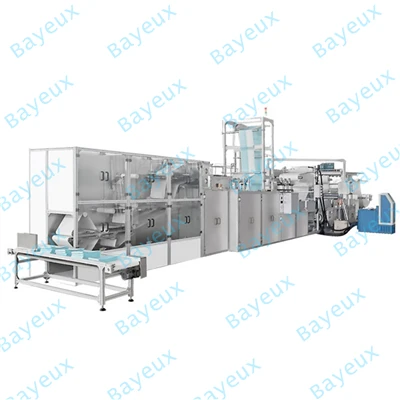
First, let’s clear up a common misconception: industrial hygiene machines aren’t the same as the steam cleaner you rent to scrub tile floors at home. They’re engineered specifically for the demands of industrial machinery—big, bulky, often with hard-to-reach crevices, heavy grease and grime buildup, and strict regulatory rules that a residential unit can’t come close to meeting. The core function of these machines is to remove contaminants that manual cleaning simply can’t eliminate, and to do it without damaging sensitive parts or stopping production longer than necessary.
Take food and beverage processing, for example. Every piece of equipment that touches food—mixers, conveyors, tanks, filling lines—must be completely free of bacteria, food residue, and cross-contamination risks. The FDA and other global food safety agencies like the EU’s EFSA mandate regular, deep cleaning, and manual scrubbing often leaves behind hidden pockets of old grease or product buildup that can turn into mold or salmonella. That’s where high-pressure hot water (HPHW) systems come in, a type of hygiene machine we supply. These machines use water heated to 140 to 180 degrees Fahrenheit, pressurized to 1,000 to 5,000 PSI, paired with food-safe detergents tailored to the specific grime in a factory. For a conveyor belt that moves raw meat, a manual cleaner can’t blast under the belt rollers or the gaps between the frame as thoroughly as an HPHW machine. What’s more, because the heat kills 99.9% of common foodborne pathogens on contact, it cuts down on the need for multiple rinses and re-cleanings—saving hours per shift.
Another key type of industrial hygiene machine is the automated clean-in-place (CIP) system, which is a favorite among pharmaceutical and biotech manufacturers. These machines are fully integrated into existing processing lines, so cleaning happens without any manual disassembly. The system pumps a precise mix of cleaning solution, rinse water, and sanitizer through the pipes, tanks, and valves on a timed cycle—following exact regulatory protocols. For a company making injectable drugs, even a tiny bit of residual cleaning solution left in a pipe can ruin an entire batch of product. CIP systems eliminate human error here: they’re programmed to maintain the correct temperature, flow rate, and chemical concentration for every step, which isn’t possible with manual cleaning. We’ve had a pharmaceutical client tell us that switching to a CIP machine cut their product contamination incidents by 85% in the first six months, and reduced their cleaning time from 4 hours per line to just 45 minutes. That’s the kind of return on investment that makes hygiene machines worth every penny.
Then there’s industrial parts washers, a staple for automotive and heavy machinery manufacturers. These machines are designed to clean individual parts—engine blocks, gears, hydraulic components—before assembly or reconditioning. Manual cleaning of engine parts often uses solvent-based degreasers, which are toxic, expensive to dispose of, and bad for worker health. Our parts washers use water-based detergents, heated to 160 degrees, and mechanical agitation (like spray jets or rotating baskets) that dislodges grease from even the most complex part surfaces. Some of our larger parts washers can handle parts up to 10 feet long, making them perfect for heavy equipment components. We also offer enclosed parts washers that contain all fumes and wastewater, so factories don’t have to spend extra on ventilation or hazardous waste disposal—another big cost saver.
Now, I know what some maintenance teams are thinking: “Our current cleaning process works. Why change it?” It’s a fair question, and I get to walk through that with every customer who reaches out. Let’s talk about the hidden costs of skipping specialized hygiene machines. First, safety: manual cleaning of heavy machinery often requires workers to climb on equipment, use ladders, and handle harsh chemicals, leading to thousands of workplace injuries every year. OSHA reports that over 10,000 industrial cleaning-related injuries are reported annually in the U.S. alone, many from falls, chemical burns, or being struck by moving parts during manual cleaning. Hygiene machines reduce that risk by letting workers clean from a safe distance, with automated systems doing the heavy lifting.
Second, downtime. When a factory shuts down to clean equipment manually, every hour of shutdown costs money—lost production, delayed orders, missed deadlines. A 2023 study from the Manufacturing Extension Partnership found that unplanned downtime costs U.S. manufacturers an average of $50 billion annually, and 30% of that downtime is caused by preventable equipment issues like grime buildup, corrosion, or mechanical failure from improper cleaning. Hygiene machines cut cleaning time by up to 70% compared to manual methods, so factories can clean during scheduled shutdowns without delaying production. For example, a beverage company we supply was shutting down their filling line for 8 hours every Sunday for manual cleaning. With a CIP machine, they now clean the line in 1 hour 15 minutes, allowing them to run an extra production run each week—translating to $120,000 in additional annual revenue.
Third, compliance. Almost every regulated industry has strict standards for equipment cleanliness, and non-compliance leads to heavy fines, product recalls, or even being shut down entirely. In 2022, a major snack food company recalled 2.2 million pounds of products because of listeria contamination, linked to hidden grime in their processing equipment. Hygiene machines are built to meet or exceed global regulatory standards—FDA, EFSA, GMP (Good Manufacturing Practices), ISO 14644 for cleanrooms. We design our machines with easy-to-access internal parts for inspection, digital logging of cleaning cycles, and adjustable chemical dosing to align with regulatory requirements, so our customers never have to worry about failing an audit.
Of course, no machine is one-size-fits-all. That’s why as a supplier, we don’t just sell a hygiene machine and walk away. We work with every customer to assess their specific needs: what industry they’re in, what kind of machinery they run, their cleaning schedule, and their budget. For example, a small craft brewery might only need a portable pressure washer for their kegs and tanks, while a large automotive plant needs a stationary parts washer for engine components. We also offer training on how to operate the machines safely, maintenance plans to keep them running for years, and custom modifications for unique equipment setups. I’ve had customers come to us after trying cheap, generic cleaning machines that damaged their machinery—we’ve since designed custom nozzles and pressure settings that clean without scratching or corroding delicate parts, like stainless steel food processing tanks.
I’ll be honest: there’s still a lot of factories out there that rely on manual cleaning, out of habit, fear of change, or not knowing that specialized hygiene machines exist. I get it—change can feel overwhelming. But when you weigh the cost of injuries, downtime, compliance risks, and lost revenue against the investment in a hygiene machine, it’s clear that the switch isn’t just a good idea—it’s a necessary one.
I’ve been in this industry for over a decade, and I’ve seen first-hand what happens when a factory invests in proper hygiene equipment: workers are safer, products are more consistent, and the business is more profitable. Last year, we worked with a small meat processing plant that had been struggling with recurring E. coli contamination in their products. They tried every manual cleaning trick they could think of, but nothing worked. We installed a targeted hot water hygiene system for their processing equipment, and within three months, they had zero contamination incidents. They recently told us that the machine had not only saved their business from a potential shutdown but also allowed them to take on a new, larger client.
If you’re still wondering whether hygiene machines are right for your industrial machinery, the answer is almost certainly yes—no matter what industry you’re in. The question isn’t if you need one, it’s which type will work best for your operations. I’m here to help you figure that out. Whether you’re looking for a portable pressure washer, a fully integrated CIP system, or a parts washer for your shop floor, we can design a solution that fits your needs, your budget, and your schedule.
Don’t let outdated cleaning methods hold your business back from safety, compliance, and profitability. Contact our team today to schedule a consultation, and let’s talk about how a hygiene machine can transform your industrial cleaning process.
Adult diaper machine References
Occupational Safety and Health Administration (OSHA). (2022). Industrial Cleaning Safety Guidelines.
U.S. Manufacturing Extension Partnership (MEP). (2023). Unplanned Downtime in U.S. Manufacturing: Cost Drivers and Solutions.
Food and Drug Administration (FDA). (2021). Food Equipment Cleaning and Sanitation Standards.
European Food Safety Authority (EFSA). (2022). Cross-Contamination Prevention in Food Processing Facilities.
International Organization for Standardization (ISO). (2020). ISO 14644-1: Cleanrooms and Associated Controlled Environments.
Quanzhou Bayeux Industrial Co., Ltd.
Address: ROOM 805,BUILDING 3,NO,8 XIANGSHAN ROAD, XIANGSHAN COMMUNITY, QINGYANG STREET, JINJIANG QUANZHOU FUJIAN.
E-mail: yeliqun_520@163.com
WebSite: https://www.qzbayeux.com/
