How do auto seatbelts perform in old – model cars?
As a supplier of auto seatbelts, I’ve spent years delving into the intricacies of these life – saving devices. One question that frequently crops up in my discussions with customers, enthusiasts, and safety experts alike is: How do auto seatbelts perform in old – model cars? This is not just a matter of historical curiosity; it has real – world implications for the millions of people still driving vintage and classic vehicles on our roads today. Auto Seatbelt
The Evolution of Auto Seatbelts
To understand how seatbelts perform in old – model cars, we first need to take a trip down memory lane and explore the evolution of seatbelt technology. The concept of using restraints in vehicles dates back to the 19th century, but it wasn’t until the mid – 20th century that seatbelts started to become a standard feature.
In the early days, seatbelts were simple lap belts. These were designed to keep the occupant in their seat during a sudden stop or collision, but they had significant limitations. Lap belts primarily restrained the lower body, leaving the upper body vulnerable to injury. In a frontal collision, the unrestrained upper body could be thrown forward, hitting the steering wheel, dashboard, or windshield. This often resulted in serious head, neck, and chest injuries, even though the lap belt was doing its job of keeping the lower body in place.
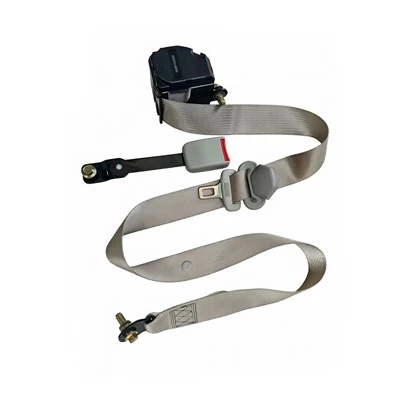
As automotive safety research advanced, the three – point seatbelt was introduced. Developed by Nils Bohlin at Volvo in 1959, the three – point seatbelt revolutionized vehicle safety. It consisted of a lap belt and a shoulder strap that crossed the chest, distributing the force of a collision over a larger area of the body. This design significantly reduced the risk of serious injury in frontal collisions by restraining both the upper and lower body.
Performance of Seatbelts in Old – Model Cars
Lap Belts in Classic Vehicles
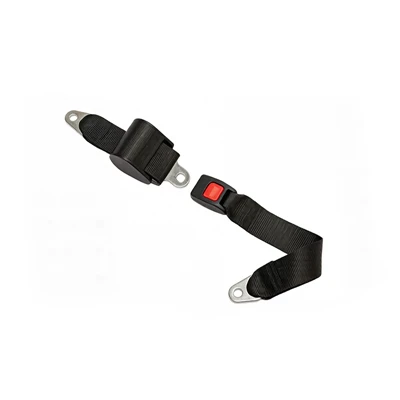
Many old – model cars were equipped with only lap belts. When it comes to performance, these lap belts have a mixed record. In low – speed collisions or sudden stops, lap belts can prevent the occupant from being ejected from the vehicle, which is a major safety benefit. For example, in a fender – bender at a parking lot speed of 5 – 10 miles per hour, a lap belt can keep the driver or passenger from sliding forward and hitting the dashboard.
However, in more severe collisions, lap belts can actually cause harm. The concentrated force on the abdomen can lead to internal injuries such as damage to the liver, spleen, or intestines. In high – speed frontal collisions, the unrestrained upper body can still be thrown forward, increasing the risk of head and neck injuries. A study by the National Highway Traffic Safety Administration (NHTSA) found that in frontal crashes, occupants wearing only lap belts were at a significantly higher risk of serious spinal injuries compared to those wearing three – point seatbelts.
Early Three – Point Seatbelts
Some older cars did come with three – point seatbelts, but the early versions were not as advanced as the ones we have today. The materials used in these seatbelts were often less durable, and the retractor mechanisms were not as reliable. For instance, the webbing might have frayed more easily over time, reducing its strength and effectiveness.
The early three – point seatbelts also lacked some of the advanced features that modern seatbelts have. They did not have pretensioners, which are devices that tighten the seatbelt immediately in a collision to reduce slack and keep the occupant firmly in place. Nor did they have load limiters, which allow the seatbelt to gradually release some tension during a collision to reduce the force on the occupant’s body.
Factors Affecting Seatbelt Performance in Old – Model Cars
Age and Wear
One of the most significant factors affecting seatbelt performance in old – model cars is age and wear. Over time, the seatbelt webbing can deteriorate due to exposure to sunlight, heat, and moisture. UV rays can cause the webbing to become brittle, reducing its strength. Additionally, normal wear and tear from regular use can fray the edges of the webbing, compromising its integrity.
The retractor mechanism is also prone to wear. If the retractor fails to work properly, the seatbelt may not retract properly or may become stuck. This can prevent the seatbelt from being adjusted correctly or may even render it useless in a collision.
Compatibility with the Vehicle
Another factor is the compatibility of the seatbelt with the vehicle’s design. Old – model cars were built with different safety standards and design philosophies compared to modern vehicles. The seatbelt mounting points in older cars may not be as strong or designed as well as those in newer cars. In a collision, if the mounting points fail, the seatbelt will not be able to perform its function of restraining the occupant.
Furthermore, the interior design of old – model cars may not be optimized for seatbelt use. For example, the seats may not be shaped in a way that provides proper support for the seatbelt, which can affect the distribution of forces during a collision.
Upgrading Seatbelts in Old – Model Cars
Given the limitations of the original seatbelts in old – model cars, many owners are considering upgrading their seatbelts. As an auto seatbelt supplier, I’ve seen a growing demand for seatbelt upgrade kits for classic and vintage vehicles.
Upgrading to modern seatbelts can significantly improve the safety of old – model cars. Modern seatbelts are made from high – strength materials that are more resistant to wear and tear. They also come with advanced features such as pretensioners and load limiters, which can greatly reduce the risk of injury in a collision.
When upgrading seatbelts in old – model cars, it’s important to ensure that the new seatbelts are compatible with the vehicle. This may require some modifications to the seatbelt mounting points or the interior of the car. It’s always advisable to consult a professional installer to ensure that the upgrade is done correctly.
The Importance of Seatbelt Use in Old – Model Cars
Regardless of the performance of the seatbelts in old – model cars, it’s crucial that occupants always wear their seatbelts. Even the most basic seatbelt can provide some level of protection in a collision. According to the NHTSA, seatbelt use reduces the risk of fatal injury to front – seat passenger car occupants by 45%.
In the case of old – model cars, wearing a seatbelt can be the difference between life and death. While the seatbelts may not be as advanced as those in modern vehicles, they still offer a vital layer of protection.
Conclusion
In conclusion, the performance of auto seatbelts in old – model cars varies depending on the type of seatbelt, its age and condition, and the compatibility with the vehicle. Lap belts, which were common in older cars, have limitations and can even cause harm in certain situations. Early three – point seatbelts, while an improvement over lap belts, also lack the advanced features of modern seatbelts.
However, with the option to upgrade seatbelts in old – model cars, owners can enhance the safety of their vehicles. As an auto seatbelt supplier, I’m committed to providing high – quality seatbelt products and solutions for classic and vintage car owners.
Racing Seat Belts If you’re an owner of an old – model car and are interested in upgrading your seatbelts or learning more about our seatbelt products, I invite you to reach out to us. We have a team of experts who can guide you through the process of selecting the right seatbelts for your vehicle and ensuring proper installation. Contact us today to start a conversation about improving the safety of your classic car with our top – notch auto seatbelts.
References
- National Highway Traffic Safety Administration (NHTSA). Various reports on seatbelt effectiveness and vehicle safety.
- Historical automotive safety research papers on the evolution of seatbelt technology.
Yangzhong Weian Mechanical and Electrical Co., Ltd.
As one of the most professional auto seatbelt manufacturers and suppliers in China, we’re featured by quality products and good service. Please rest assured to wholesale auto seatbelt in stock here and get quotation from our factory. Customized orders are welcome.
Address: Group 10, Xinhua Village, Xilaiqiao Town, Yangzhong City; West of The Bus Terminal On Yuanqu Avenue.
E-mail: hfsaml_2008@qq.com
WebSite: https://www.weianseatbelt.com/
